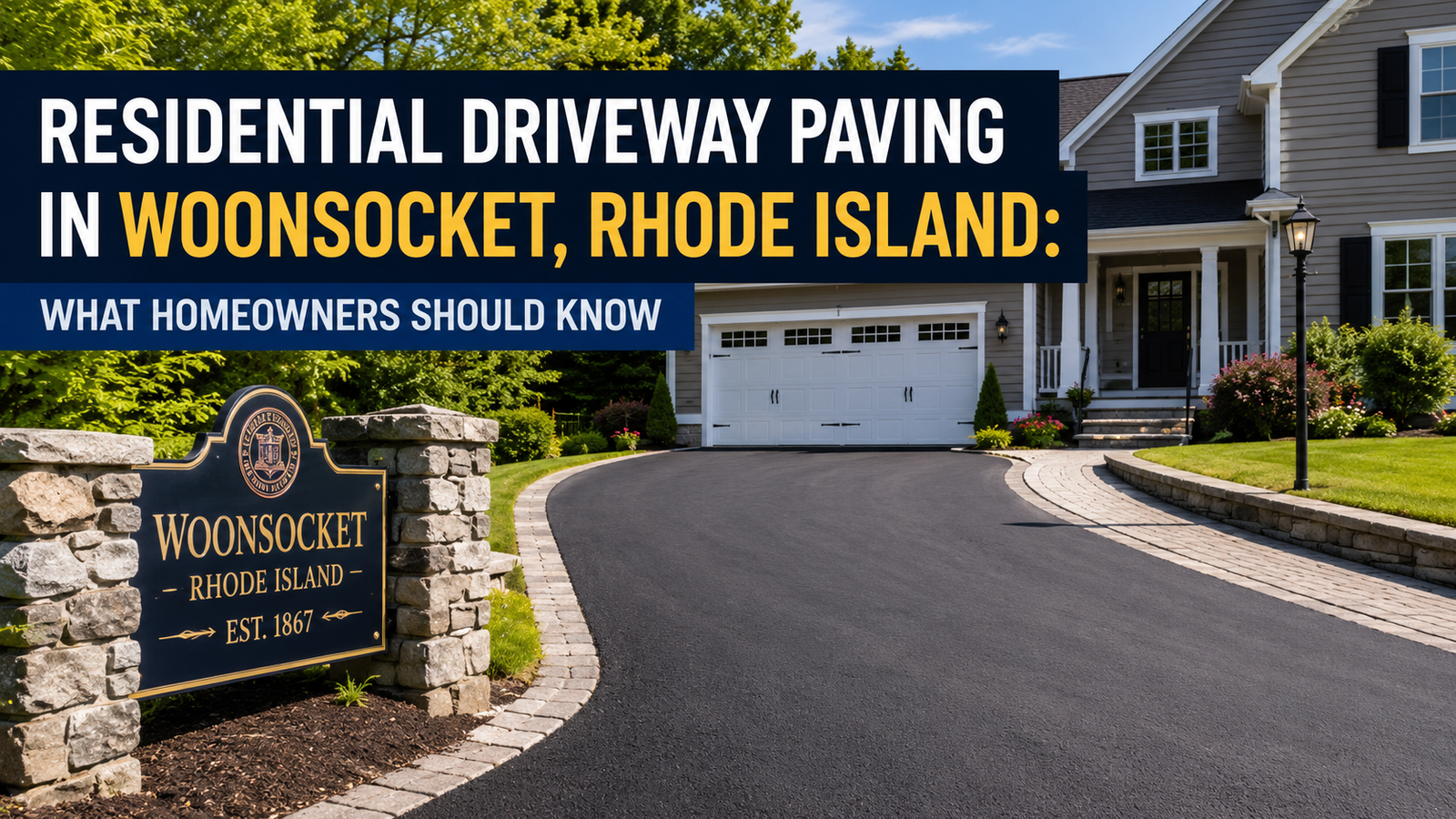
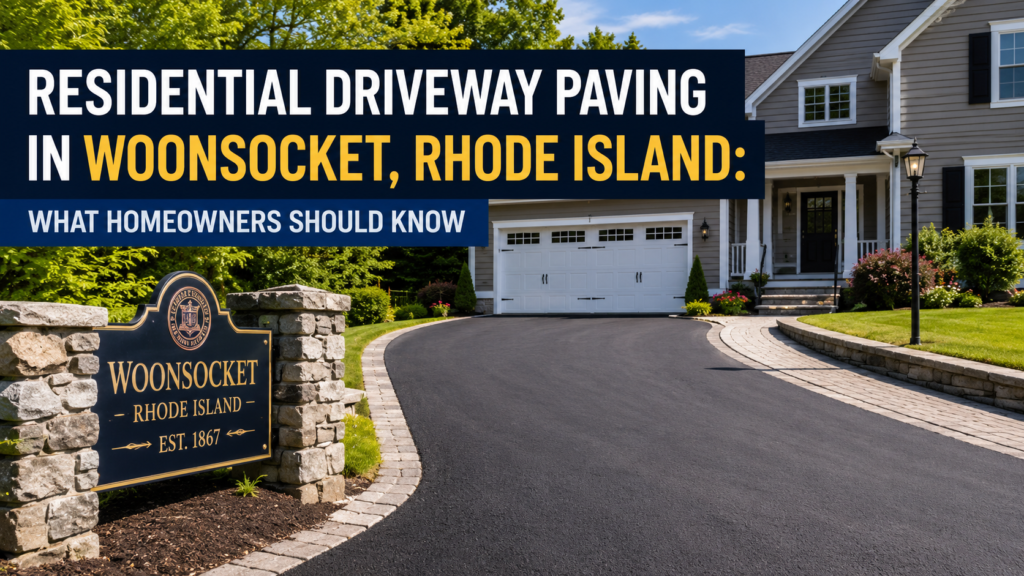
A residential driveway is one of the most visible and frequently used features of any Woonsocket home. It is the first surface family members and visitors encounter, and its condition significantly influences the appearance and functionality of the property. Asphalt driveways are the most common choice for Woonsocket homeowners providing durability, ease of maintenance, and an attractive appearance when properly installed and cared for. This guide explains what Residential Driveway Paving Woonsocket involves, how to recognize when a new driveway is needed, and what the installation process looks like.
Signs Your Woonsocket Driveway Needs Replacement or Resurfacing
Rhode Island’s freeze-thaw climate is hard on driveways, and Woonsocket homeowners typically see deterioration patterns that are specific to New England conditions. Extensive cracking particularly an interconnected network of cracks called alligator cracking, which resembles the pattern of an alligator’s scales indicates that the asphalt has deteriorated structurally, often due to base failure or water infiltration. Alligator cracking signals that the surface has moved beyond the point where simple crack filling or sealcoating can address the problem; the affected areas typically require full-depth repair or replacement.
Potholes are a clear indicator of advanced deterioration. They form when water infiltrates through surface cracks, reaches the subbase, saturates and weakens it, and then the asphalt surface collapses under vehicle loads. Individual potholes can be patched, but a driveway with multiple potholes or widespread base failure typically warrants full replacement.
Edge deterioration crumbling, breaking, or sinking at the driveway edges is extremely common in Woonsocket driveways. Asphalt edges are the most vulnerable portions of the surface because they have no lateral support. Water running off the driveway edge saturates the soil immediately adjacent, which softens and erodes, leaving the asphalt edge without support. Over time, edges crack and break away. Edge deterioration that has progressed significantly with edges collapsing or breaking off in significant sections typically requires full replacement rather than simple patching.
Surface oxidation causes asphalt to turn from its original near-black color to a progressively lighter gray. Heavily oxidized asphalt becomes brittle and develops longitudinal and transverse cracking from thermal stress. A driveway that has become very light gray and shows surface cracking throughout has lost significant binder integrity and typically benefits from resurfacing or replacement depending on the underlying base condition.
Residential Driveway Replacement: What the Process Looks Like
Full residential driveway replacement in Woonsocket begins with removal of the existing surface. The old asphalt is broken up with an excavator or plate compactor and removed from the site. The amount of existing material removed depends on the project scope some projects remove only the asphalt layer, while others also remove and replace the underlying base material if it has been contaminated, frost-heaved, or otherwise compromised.
Grading and subbase preparation follow. The ground is shaped to provide positive drainage a consistent slope that directs water away from the house foundation and off the driveway edge. Standing water on a Woonsocket driveway accelerates every deterioration mechanism: it infiltrates surface cracks, saturates the base, and freezes in winter to accelerate frost damage. Getting the drainage slope right during grading is one of the most important steps in driveway installation.
Gravel base installation comes next. A compacted layer of crushed stone typically 6 to 8 inches for residential driveways in Rhode Island provides the stable, well-drained foundation that allows the asphalt to perform as designed. The specific depth depends on the existing soil conditions, the expected vehicle loads, and drainage requirements. In Woonsocket’s variable soils, which include areas with high clay content that drains poorly and is susceptible to frost heave, adequate base depth is particularly important.
Asphalt installation is the final step. Hot mix asphalt is delivered by truck and spread using a paving machine to achieve consistent depth and grade. Compaction with a roller follows immediately while the asphalt is hot. Residential driveways in Woonsocket typically receive 2.5 to 3 inches of compacted asphalt in a single lift. The finished driveway surface should be smooth, uniform in color, and properly sloped for drainage.
Driveway Resurfacing as an Alternative to Full Replacement
When a Woonsocket driveway has deteriorated at the surface but the base remains sound, resurfacing offers a less disruptive and less expensive path to a refreshed surface. Resurfacing involves installing a new layer of asphalt over the existing surface after any necessary crack filling and leveling. The key assessment is whether the existing base is solid if there is base failure beneath the existing asphalt, resurfacing will replicate the same failure pattern in the new surface within a few years.
A qualified paving contractor assesses base condition during the project estimation process. Visual inspection of existing cracking patterns, probing for soft spots, and evaluating drainage conditions all contribute to the determination of whether resurfacing is appropriate or whether full replacement is needed.
Driveway Paving Seasonal Considerations in Woonsocket
Residential driveway paving in Woonsocket is a spring-through-fall activity, with the prime season running from May through September. New England asphalt paving contractors are typically very busy during these months, and scheduling a driveway project often requires advance planning during peak season. Paving during October is possible but requires monitoring of both air and ground temperatures, as colder conditions limit the compaction window for hot mix asphalt.
New driveways installed in spring benefit from the warm summer season to fully cure before their first winter exposure. Driveways installed in fall may be more vulnerable to their first freeze-thaw season, which is one reason some contractors prefer spring and summer installation for new driveways rather than resurfacing projects.
Frequently Asked Questions About Residential Driveway Paving in Woonsocket
How do I know if my driveway needs replacement or just repairs? Localized damage individual cracks, small potholes, limited edge crumbling can often be addressed through targeted repairs or resurfacing. Widespread alligator cracking, multiple large potholes, significant base failure, or advanced drainage problems throughout the driveway typically warrant full replacement. A professional assessment from a Woonsocket paving contractor can definitively answer this question for your specific driveway.
Should I seal my driveway before or after it is paved? Sealcoating is applied to existing asphalt surfaces, not before paving. After a new driveway is installed, wait at least 90 days ideally one full year before applying the first sealcoat. This allows the asphalt to fully cure and harden before the sealcoat is applied.
What happens to the old asphalt from my driveway? Old asphalt from driveway removal is a recyclable material. Asphalt from removed driveways in Woonsocket typically goes to asphalt recycling facilities where it is processed as reclaimed asphalt pavement (RAP) and used as a component in new asphalt mixes. This recycling makes asphalt one of the most-recycled materials in the United States.