Queue Management System in Islamabad: Smarter Public Service
Government offices, hospitals, and utility centers in the capital handle enormous daily footfall, and disorganized lines cost everyone time. A modern queue management system in Islamabad brings order to that chaos, giving each visitor a fair token and each supervisor a live view of demand. In 2026, as public and private institutions digitize their front desks, structured queuing has moved from a nice-to-have to an operational must.
This guide explains how token-based systems work in the capital, which features matter for high-volume offices, and how barcode-driven verification speeds up document-heavy service. If you manage a busy service hall, these insights will help you serve more people with less stress.
Why a Queue Management System in Islamabad Pays Off
Capital-city service centers face unique pressure. Citizens travel across the city for a single appointment, so a wasted trip or a two-hour wait feels far more costly. Structured queuing respects that time and protects your institution’s reputation.
A digital token platform also gives managers hard data. Instead of guessing when the morning rush peaks, they see it on a dashboard and staff their counters accordingly.
Immediate Benefits for Busy Offices
- Fair, transparent ordering that ends line-jumping disputes.
- Live wait-time displays that calm anxious visitors.
- Counter-level performance data for smarter scheduling.
- Bilingual Urdu and English tickets and signage.
How Token and Verification Systems Work Together
A queue platform handles the flow, while identity and document checks handle accuracy. In the capital’s government and banking offices, the two must work as one seamless process.
Digital Token Flow
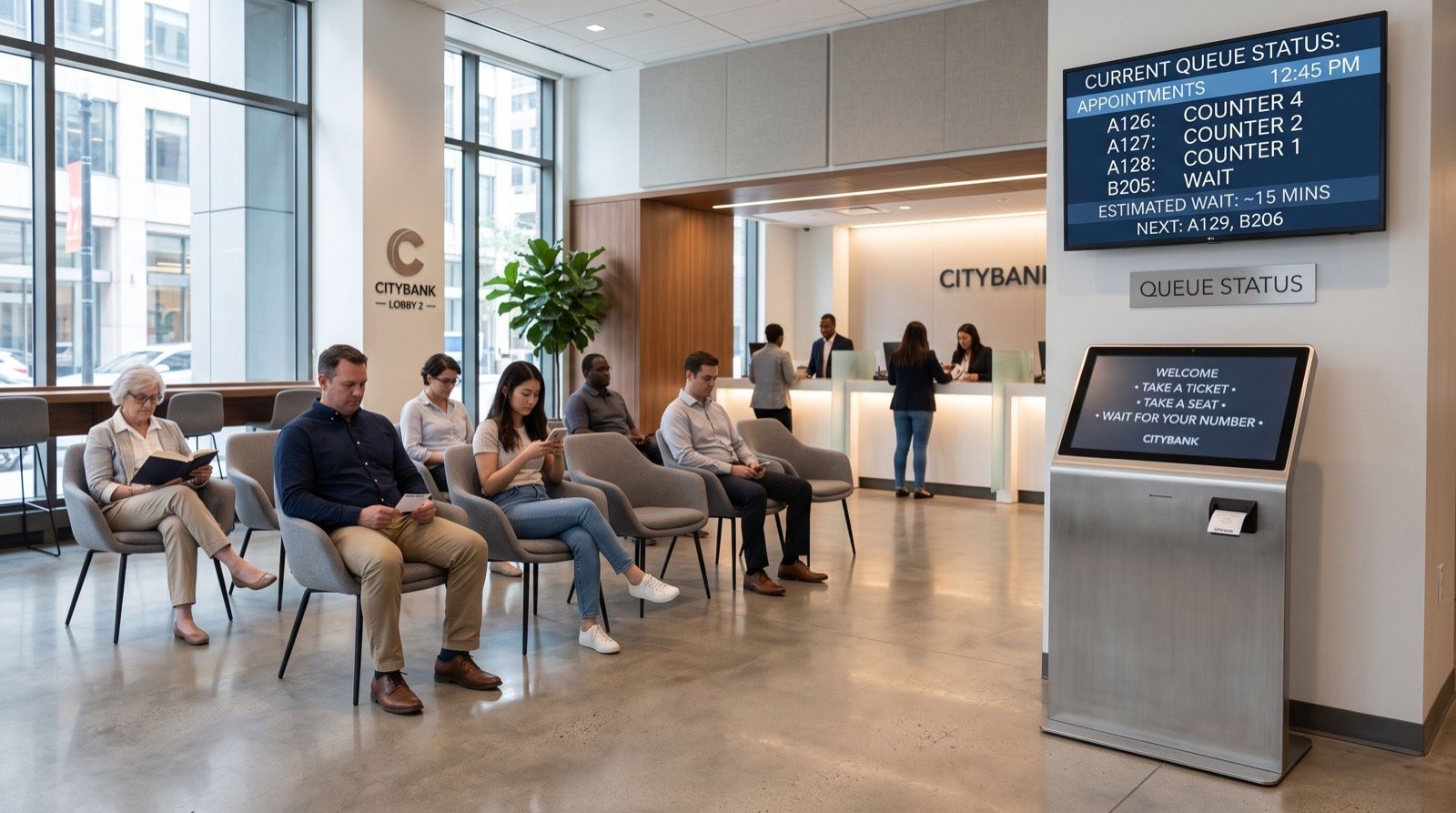
Visitors collect a token from a kiosk or their phone, then watch a display board or receive an SMS as their turn nears. A well-built queue management system in islamabad supports both walk-ins and pre-booked appointments in the same queue, which is vital for mixed-traffic offices.
Fast Document Scanning
Many capital services require reading ID cards, forms, or reference slips. A rugged presentation scanner such as the Honeywell Orbit HF680 reads printed and on-screen barcodes instantly, so counter staff verify documents without slowing the line.
Which Sectors Benefit Most?
Almost every high-footfall institution gains, but a few see transformative results. The table below maps common capital-city use cases to their biggest wins.
| Sector | Primary Use | Biggest Win |
|---|---|---|
| Government office | Document processing | Fair, auditable queues |
| Hospital | Patient triage | Reduced waiting-room crowding |
| Bank | Teller routing | Faster, secure transactions |
| Utility center | Bill and complaint desks | Lower peak-hour pressure |
Choosing the Right Platform
Not every system suits a high-volume capital office. Weigh these priorities before signing a contract, and insist on a live demo with your real traffic patterns.
- Bilingual support: Urdu and English must appear on tickets, boards, and announcements.
- Appointment integration: Blend booked and walk-in visitors without a separate line.
- Robust reporting: Track wait time, service time, and no-show rates per counter.
- Reliable local support: On-site maintenance shortens downtime during outages.
- Hardware compatibility: Ensure kiosks, displays, and scanners work as one system.
A Practical Tip Worth Adopting
Place a single large display near the entrance that shows the current wait time for each service type. Visitors who see an honest estimate settle in calmly instead of crowding the counter, and staff report noticeably fewer interruptions within days.
Data, Privacy, and Standards
Public-facing systems handle personal information, so security cannot be an afterthought. Align your processes with recognized guidance such as the framework from the U.S. National Institute of Standards and Technology, which offers practical privacy-engineering principles any service center can adapt.
Barcode accuracy also depends on well-formed codes. The manufacturer resource at Honeywell Safety and Productivity Solutions documents scanner specifications and durability ratings for demanding public environments.
When you plan a deployment, work with trusted professionals who understand both the software and the local support realities of the capital.
Measuring Success After Launch
Define success before you flip the switch. Track average wait time, counter utilization, and citizen satisfaction, then compare the first month against your paper-era baseline.
Share those results with leadership. Concrete numbers, like a thirty percent drop in average wait, turn a pilot project into a fully funded, city-wide standard.
Rolling Out Without Disrupting Service
A busy capital office cannot simply close for a week to install new technology. A phased rollout keeps the doors open while you upgrade behind the scenes.
Start by running the digital token system alongside your existing paper process for a short overlap period. Staff and visitors adjust gradually, and you catch configuration issues before they affect everyone.
Next, train a small group of front-desk champions who can coach colleagues during the transition. Peer guidance lands better than a one-time vendor briefing, and it builds internal confidence fast.
A Phased Timeline That Works
- Week one: Install kiosks and displays, run a quiet internal test.
- Week two: Operate digital and paper tokens in parallel.
- Week three: Retire paper, monitor the dashboard closely.
- Week four: Review data and fine-tune counter assignments.
This measured approach protects citizen service throughout the change. By the end of the first month, most offices report calmer halls and shorter average waits without a single disruptive shutdown.
Frequently Asked Questions
How does a queue management system in Islamabad handle both walk-ins and appointments?
Quality platforms merge both into a single fair queue. Appointment holders receive priority windows while walk-ins fill the gaps, so no counter sits idle and no visitor feels overlooked.
Do these systems support Urdu?
Yes. Reliable platforms display tokens, signage, and voice announcements in Urdu and English together, which suits the capital’s diverse visitors and staff.
Can I add barcode scanning later?
Usually yes. Most systems integrate scanners like the Orbit HF680 through standard interfaces, so you can start with tokens and add document verification when budget allows.
Is a cloud or on-premise setup better for government offices?
It depends on data policy. Some agencies require local hosting for compliance, while others prefer cloud for easy scaling. Choose a vendor that offers both options.
Conclusion and Next Steps
A well-planned queue management system in Islamabad transforms crowded, frustrating service halls into calm, measurable operations. Paired with fast barcode verification, it lets your team serve more citizens accurately and fairly throughout 2026.
Ready to modernize your front desk? Request a demo with your real traffic, confirm bilingual and hardware support, and choose a partner with proven local service. Take the first step toward shorter lines today.